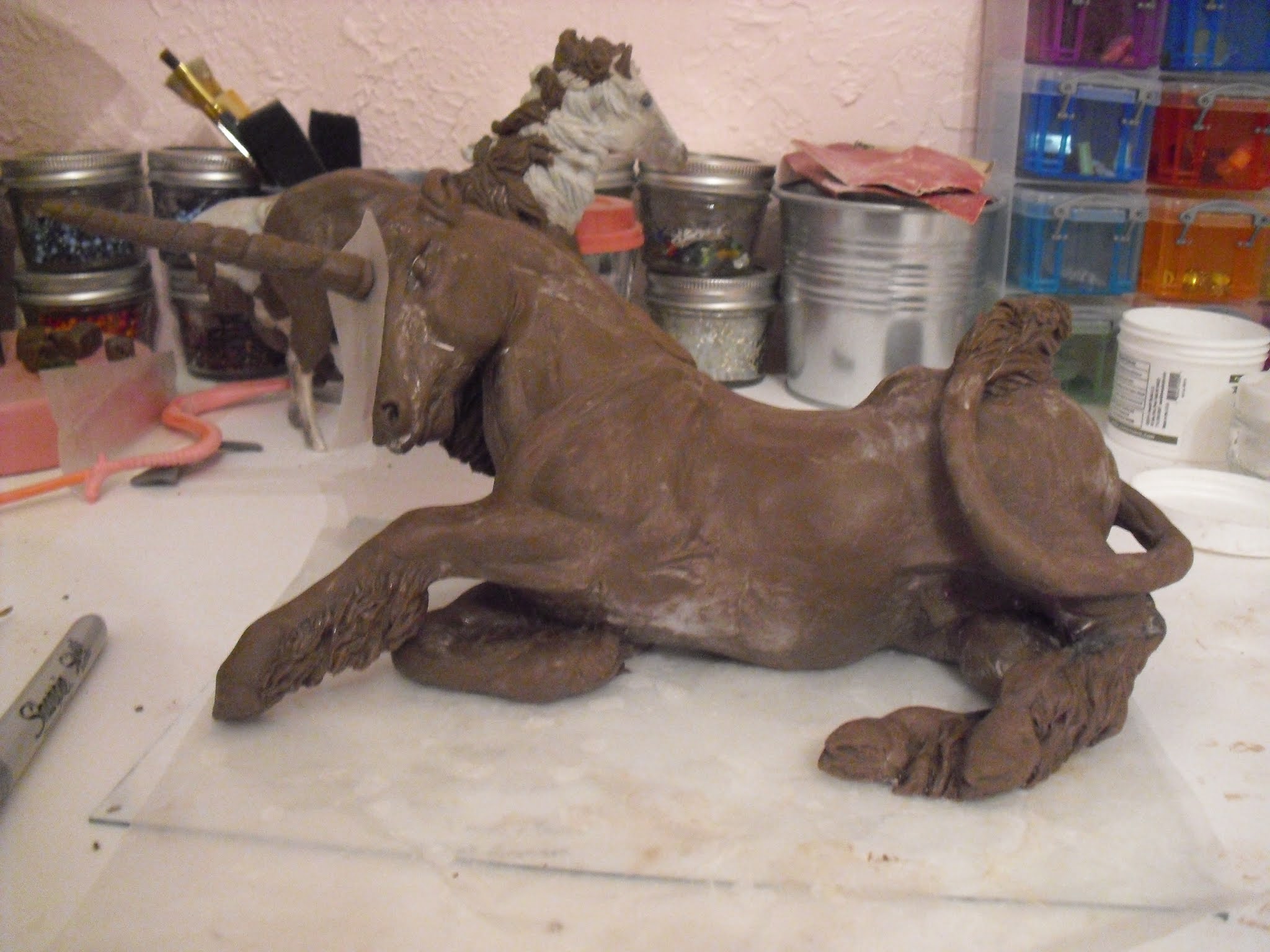
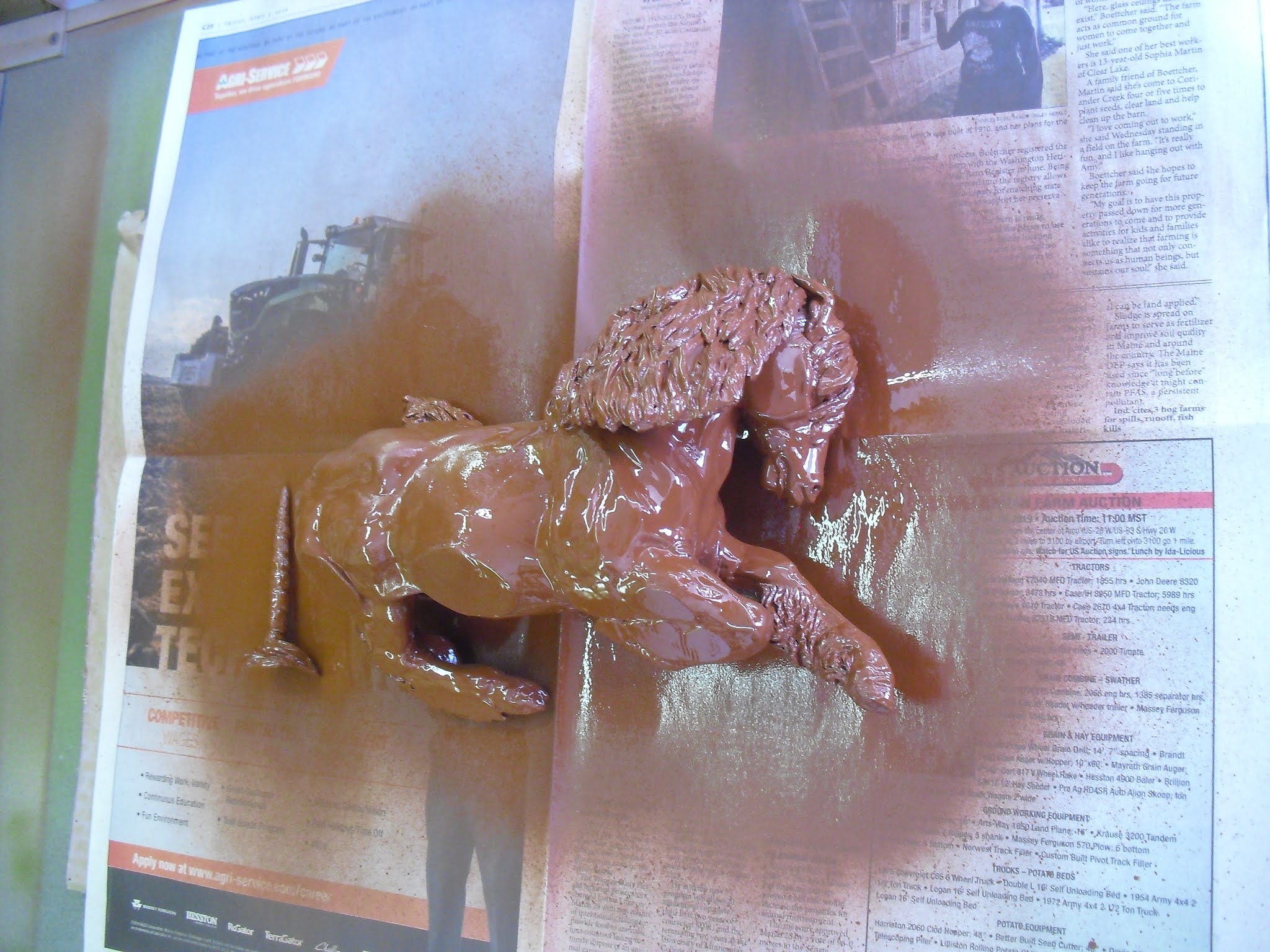
Just a few days ago, I decided to check Rainbow's MHOSS entry information, because she was DQ'd for not having a Mustang Breed specified. Weird thing is, she did. But, it's the breed I chose for her and her immediate family based on a theory from a Spirit: Stallion of the Cimarron Fandom website; which was the Cayuse...Pony....apparently??? And not considered a Mustang??? Well, from all the information I had previously researched about the Cayuse Pony was extremely inconsistent and confusing as to what type they fall under. Additionally, The Cayuse Tribe is in Oregon. OK, that fits perfectly, since Spirit is based off of the Kiger Mustang, whose range is in Oregon.
Then the rabbit hole started.
So...where does the story is supposed to take place?
In 1800's Oregon.
Ok. But....Oregon doesn't have red sandstone regions - Colorado, Utah, Arizona, and New Mexico does.
Doesn't a guy in the movie say something about connecting in Utah (had the realization that he is talking about The Golden Spike just now!) when Spirit recognized the land up ahead?
Maybe, I'll have to watch it again to be sure.
And what about Little Creek? The Colonel addressed that he is a Lakota. Wait! Aren't Lakotas apart of the Sioux Tribes?
Yeah, and the Lakotas's territory was in North & South Dakotas, most of Nebraska, East Wyoming, and Southeast Montana. Nowhere near Oregon.
Now, granted, the Native Americans at the time, just like many other cultures around the world, practiced slavery. So, it is possible that Little Creek was taken captive away from his tribe and later found family in an Oregon region tribe (the Cayuse tribe being in Northeastern Oregon).
Now, according to this map of the USA in the 1800's, the Oregon territory is much larger than what it is today. So, locations are closer than you think.
Fair enough. Then, where is this Cimarron place?
Well, there is a Cimarron River that starts and runs through Oklahoma, curves up into Kansas, and ends in Northeastern Colorado. But, now the locations are totally out of whack! Alright, what does the word Cimarron actually mean?
A wild place.
This could be anywhere.
The home of a mustang stallion.
Ok, that makes sense!
Now, back to Rain. Is she or is she not a Cayuse Pony?
According to a facts about Spirit: Stallion of the Cimarron article, she is recognized and registered (no, I'm not kidding!!) as an American Paint Horse.
But...the Paint breed wasn't established until 1962, when the registry was formed. Then, what are the possible influencers?
That's when I found the Colonial Spanish Horse.
The Colonial Spanish Horse was bred by the Chickasaw tribe with the descendants of the original horses brought over by the Spaniards. This horse was one of the influencers of the American Quarter Horse, and therefore, the American Paint Horse (became a separate registry due to the amount of loudly pintoed Quarter Horses). Other than Pinto patterns being present in the breed, one of the key features is the Roman/Convex nose - which links it to the Iberian ancestry. They also are of a smaller build.
Rain is a smallish Pinto (smaller than Spirit, that is) AND has a Roman/Convex Nose!
A perfect match indeed!
Now, where do you put a Colonial Spanish Horse, as far as type goes?
Well, on MHOSS' description for what breeds are accepted in each class (and they classify Mustangs in the Spanish Division, whereas many other shows lump them in with Stock) didn't have the specific term of Colonial Spanish Horse listed. Are there any other names - I wouldn't doubt it!
Yep, Spanish Mustang.
WOW!! All of that roundabout, indirect search ended up being something simple!!
Well, maybe not that simple - comparing body types, colors, locations, and names are not easy. The only mystery left is location. Does the Chickasaw tribe territory come anywhere close to the Lakota and the Oregon Territory? Though, keep in mind that there were a lot of horse thieving and trading among the Native American Tribes - with each other and with the Spanish, French, British, and the Americans.
Not as close as I thought, though, seeing the location makes sense in relation to one event: The Trail of Tears. Apparently, there were more Native American tribes other than the Cherokee who had adopted the European way of living, owned plantations with African Slaves, practiced Christianity, and created a written language. Unfortunately, despite appearing European (or US American), they were still considered inferior and ordered to start anew in Oklahoma with other tribes - friends and enemies alike.
So, how does this relate to the Colonial Spanish Horse?
The Chickasaw tribe moving, with their horse stock, to Oklahoma. Then, reconsider horse thieving - the Comanche were in most of Texas and the west part of Oklahoma by the 1800's. These superb horsemen were one of the most powerful tribes in North America. So, raiding smaller tribes would cause either horses to be taken by the enemy tribe or have gotten loose in all the panic.
Ok, now we have mustangs. How does this relate to Rain's parents and grandparents?
Well, Dreamworks story behind Rain's grandmother, Bonita, starts out in San Antonio during the Mexican War. She then becomes free and joins a wild herd where Rain's mother, Sierra, is born. What breed Bonita is, would have to be a different discussion as I still have not read that book. However, considering location, she would likely have more of Iberian blood in her ancestry. As far as, how mustang herds travel, they tend to stay in a general region that ranges in size. Though, considering the time period, those regions may have been larger than what they are now. They also likewise had moved further north due to colonization, therefore jumping Native American Territory borders before a horse of almost pure Iberian ancestry through runaways of the Mexican War and The Trail of Tears would even enter the Lakota territory, let alone the Oregon Territory.
Ok, there's Rain's mom's side - what about her dad's?
If Rain has such strong features that link with the Colonial Spanish Horse, then he probably came directly from the Chickasaw in Oklahoma.
I am glad to have figured out Rain's breed officially.
Next is figuring out how can Spirit be a Dun (or ND1?!) where his parents are supposed to be non-duns with no primitive markings.
Stay tuned in for that analyzation!
References:
https://horseyhooves.com/spirit-stallion-of-the-cimarron-movie/
http://www.theequinest.com/breeds/colonial-spanish/
http://afs.okstate.edu/breeds/horses/paint/index.html/#:~:text=Decorated%20by%20nature%2C%20the%20origins,horses%20roaming%20the%20Great%20Plains.
https://www.sport-horse-breeder.com/colonial-roots-quarter-horse.html
https://www.amazon.com/Spirit-Cimarron-Bonita-Kathleen-Duey/dp/0142300950
https://www.amazon.com/Sierra-Spirit-Cimarron-Paperback-April/dp/B010EVFAPE/ref=pd_sbs_1/147-0263402-4897131?pd_rd_w=Aiiji&pf_rd_p=8b76d7a7-ab83-4ddc-a92d-e3e33bfdbf03&pf_rd_r=TEXBCA6A6FB8CX1K35JZ&pd_rd_r=08858cef-3936-4bd8-944a-e980060e860c&pd_rd_wg=cN2AN&pd_rd_i=B010EVFAPE&psc=1
http://www.texasindians.com/comanche.htm
https://www.britannica.com/topic/Five-Civilized-Tribes
http://www.albc-usa.org/ChoctawRescue/crColonialspanishhorses.html#:~:text=The%20Colonial%20Spanish%20horse%20goes,and%20weighing%20700%2D900%20pounds.